
Location
Small cat living in the Case.
Physiognomy
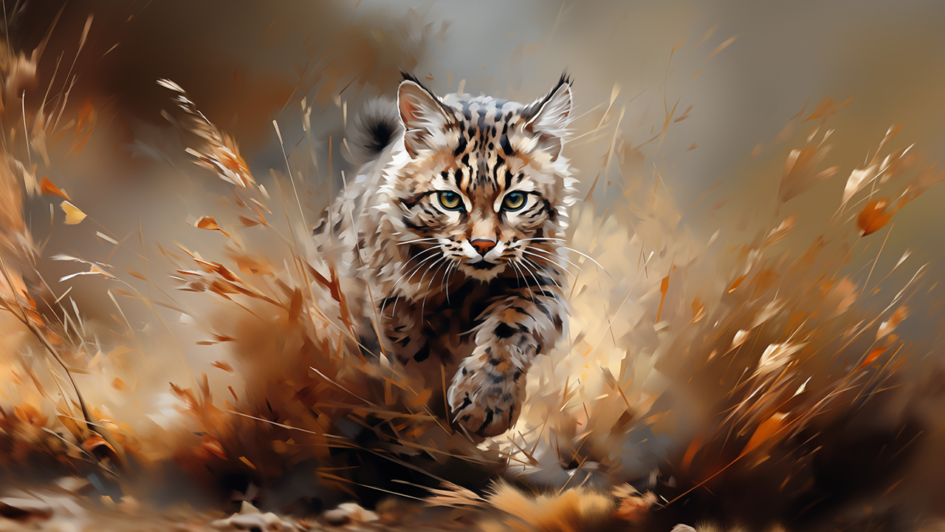
The wild cat's fur is short, light-brown and dotted with small spots useful to hide. Its hind legs are developed, long, suitable for moving in the mountains, as in plain (tall grass). Its pads allow it to exert low pressure on the ground, offering a silent movement, even on snow. Its sensory acuity is highly developed.
In addition to its nyctalopia, the wild cat has the particularity of possessing a nictitant eyelid allowing it to hunt during snowstorms when it ventures in high mountains.
Behaviour
The wild cat is a twilight predator. It hunts alone, on the lookout, sometimes taking prey that is twice its size. It happens, regularly, to abandon its previous target to hunt another one. Once his thirst for blood is quenched, it will come back to find its preys, to put them all in an inaccessible place: either in the branches of a tree, or buried under a layer of snow.
The wild cat has the habit of throwing itself on everyone who enters its territory, and on everyone who it meets. Nevertheless even if it hunts alone, it does not usually live alone. We often hear them bickering when one of them turns on a similar one yet sharing its habitat.
Anecdote
The term « aggressive like a wild cat» refers to a young person who is not very sociable. The expression is rather affectionate.

Leave a Reply